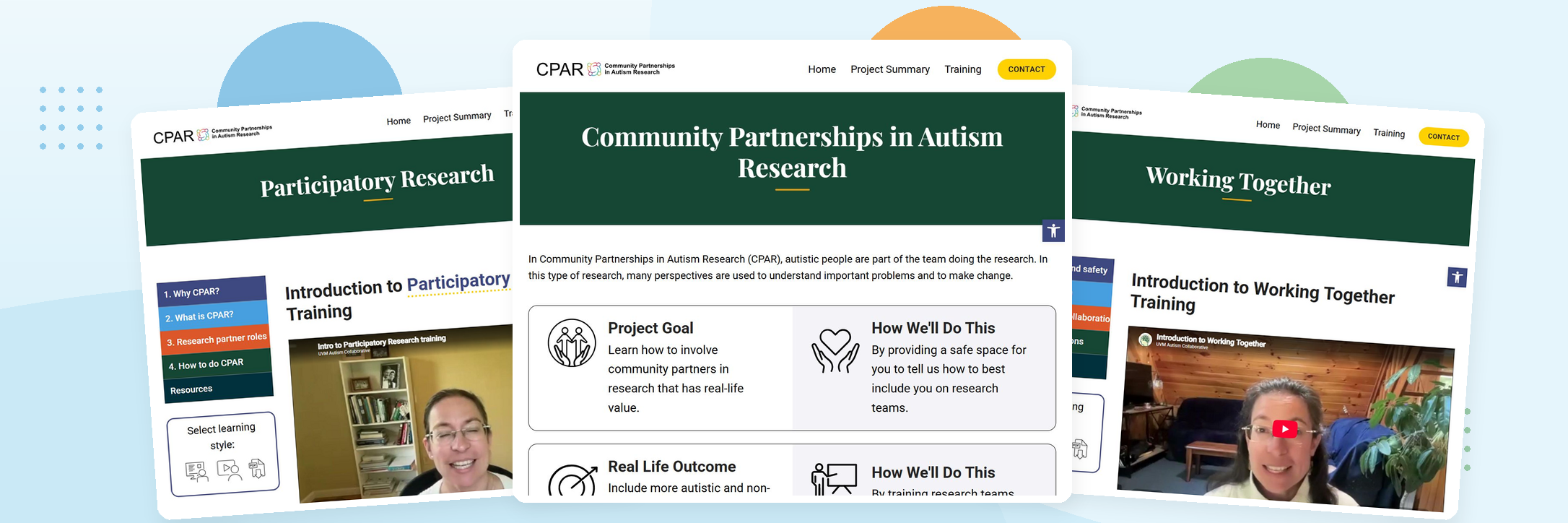
Community Partnerships in Autism Research (CPAR) provides accessible training to support inclusive partnerships between autistic community members and researchers.
Project Facts
- Project
- Community Partnerships in Autism Research (CPAR): Increasing Capacity for Autism Research in a Rural State — Co-Creation of Engagement Tools
- Principal Investigators / Project Leads
- Emily Coderre, PhD, and Liliane Savard, DPT
- Institution
- University of Vermont
- Funder / Award
- Patient-Centered Outcomes Research Institute (PCORI), Eugene Washington PCORI Engagement Award
- Grant Size
- $249,980
- Project Period
- 2022–August 2024 (PCORI award period)
- Project Type
- Accessible online training platform for participatory autism research
- My Role
- Website development, user experience and interface design, accessibility implementation, PDF remediation, and collaborative development through evolving project requirements
- Keywords
- Autism research · Participatory research · Community-engaged research · Accessible training · Autistic community partners · Research partnerships · Online learning · PDF remediation · WordPress development · PCORI
- Website
- Community Partnerships in Autism Research (CPAR)
The Project
Meaningful participation in research depends on partnerships in which community members and researchers understand and value each other’s contributions.
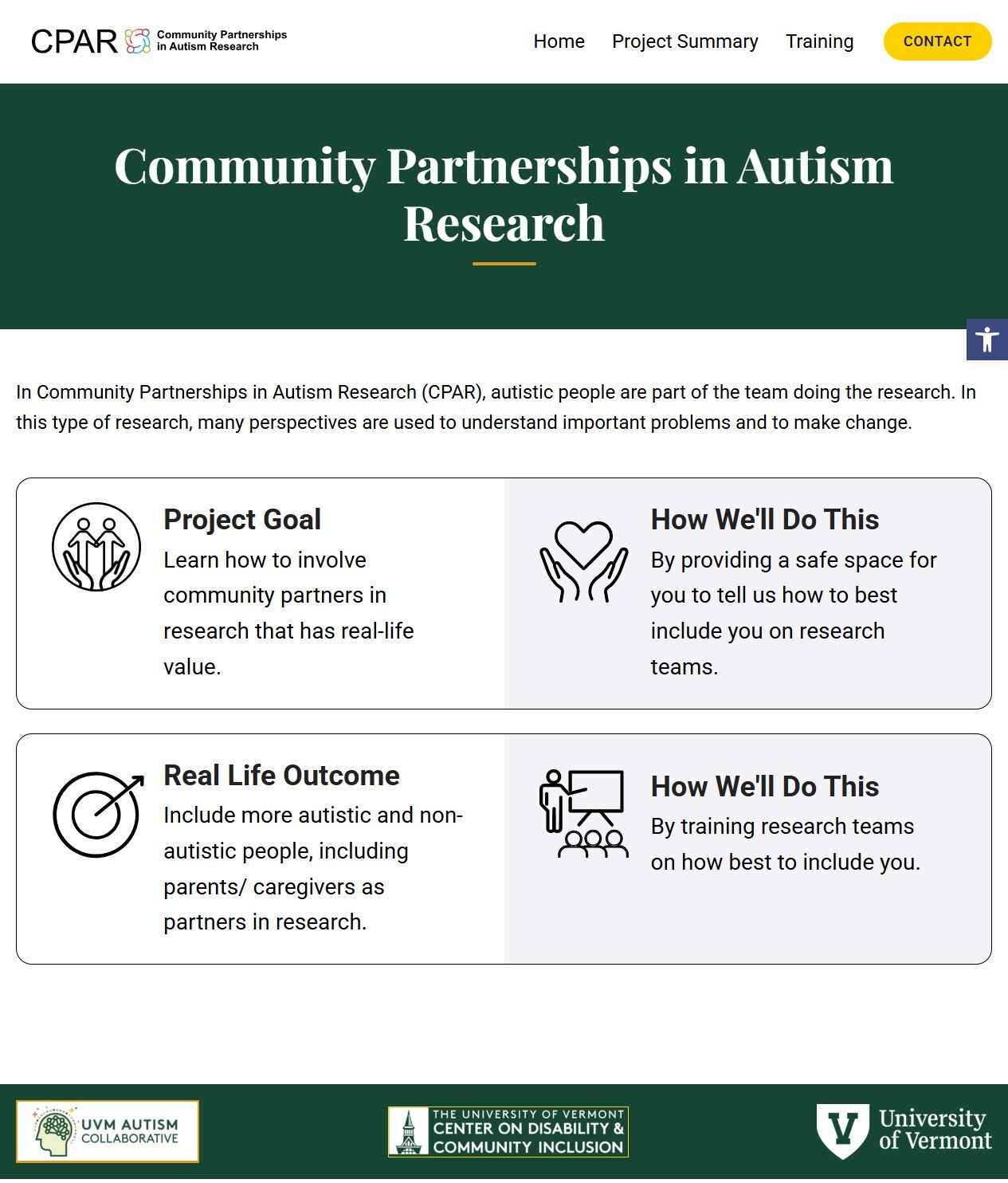
Community Partnerships in Autism Research (CPAR), an initiative of the University of Vermont’s Autism Collaborative, was created to strengthen partnerships between autistic community members and researchers. Funded by the Patient-Centered Outcomes Research Institute (PCORI), the project brought autistic adults, families, and researchers together to identify barriers to participation and develop resources that support more inclusive research practices.
The research team developed two complementary training programs. One introduces autistic community partners to the research process and describes how they can contribute to research teams. The other, created by autistic community partners, gives researchers a practical understanding of the strengths and challenges autistic people may bring to a research team and how to collaborate effectively with them.
After developing the training content, the team needed an accessible digital platform to make these resources available to both audiences. Tamarin Software was brought in to develop the CPAR website and ensure that the training materials were accessible to people with disabilities.
The Challenge
The CPAR website needed to support two different audiences, multiple ways of learning, and extensive accessibility requirements.
The project also involved a highly collaborative development process. Training materials were still being finalized when website development began, and content and requirements continued to change as the work progressed.
The downloadable presentations presented an additional technical challenge. Originally created in Google Slides, the two presentations totaled nearly 250 slides. The exported documents could not be effectively remediated for PDF accessibility using the original workflow.
Successfully delivering the platform required a combination of technical accessibility expertise, adaptable development practices, and close coordination with the research team.
Creating a Training Platform for Two Audiences
The CPAR website brings together two complementary training programs, each designed to help participants contribute more effectively to research partnerships.
Preparing Autistic Community Partners for Research
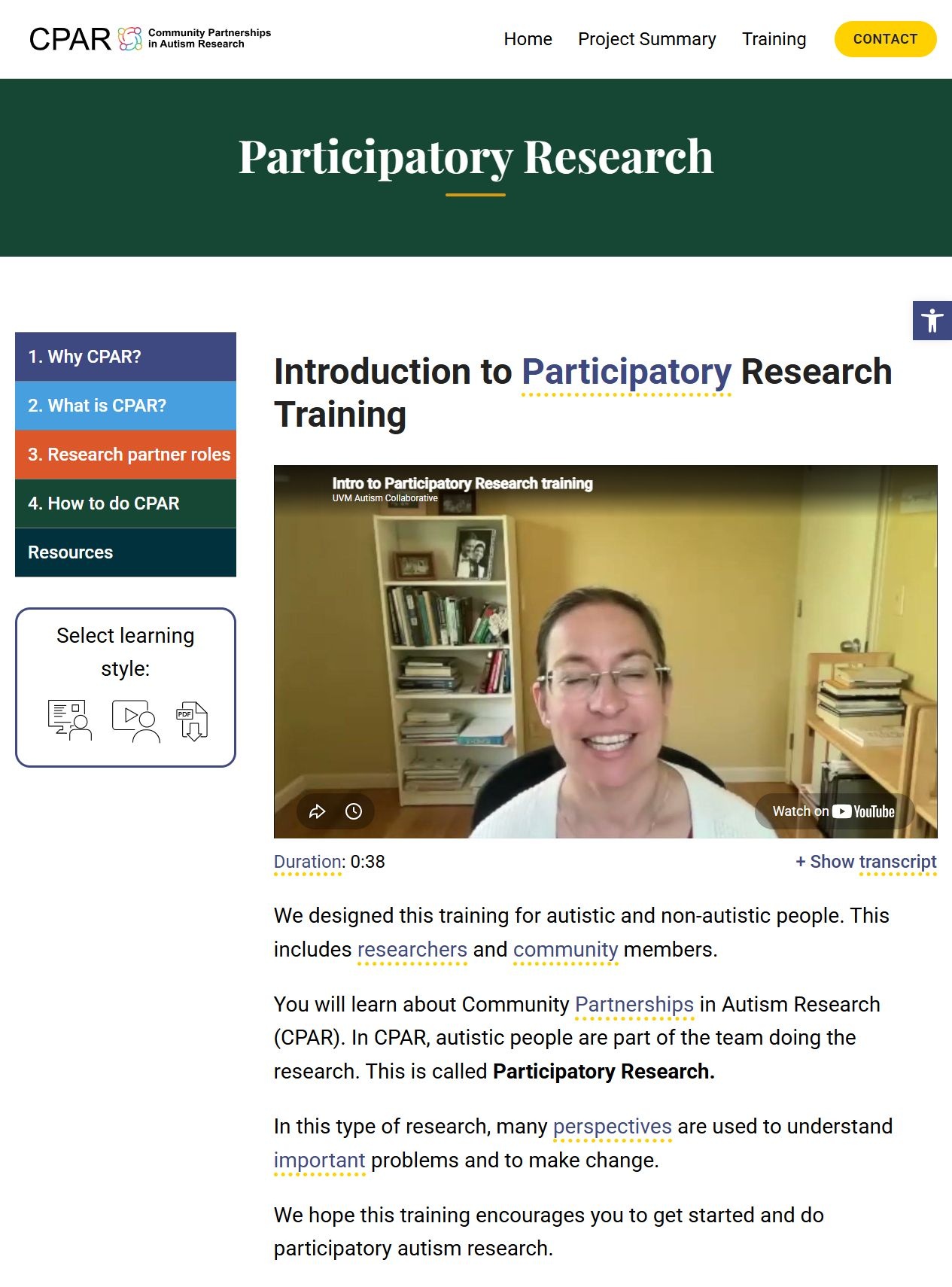
The Participatory Research Training introduces autistic community partners to the research process, including how research is conducted and how community members can contribute their knowledge, priorities, and perspectives.
The training helps make research participation more approachable by providing foundational information that community partners can explore before or during their involvement with research teams.
Tamarin developed the online platform that makes these materials available in an accessible format.
Helping Researchers Work Effectively With Autistic Partners
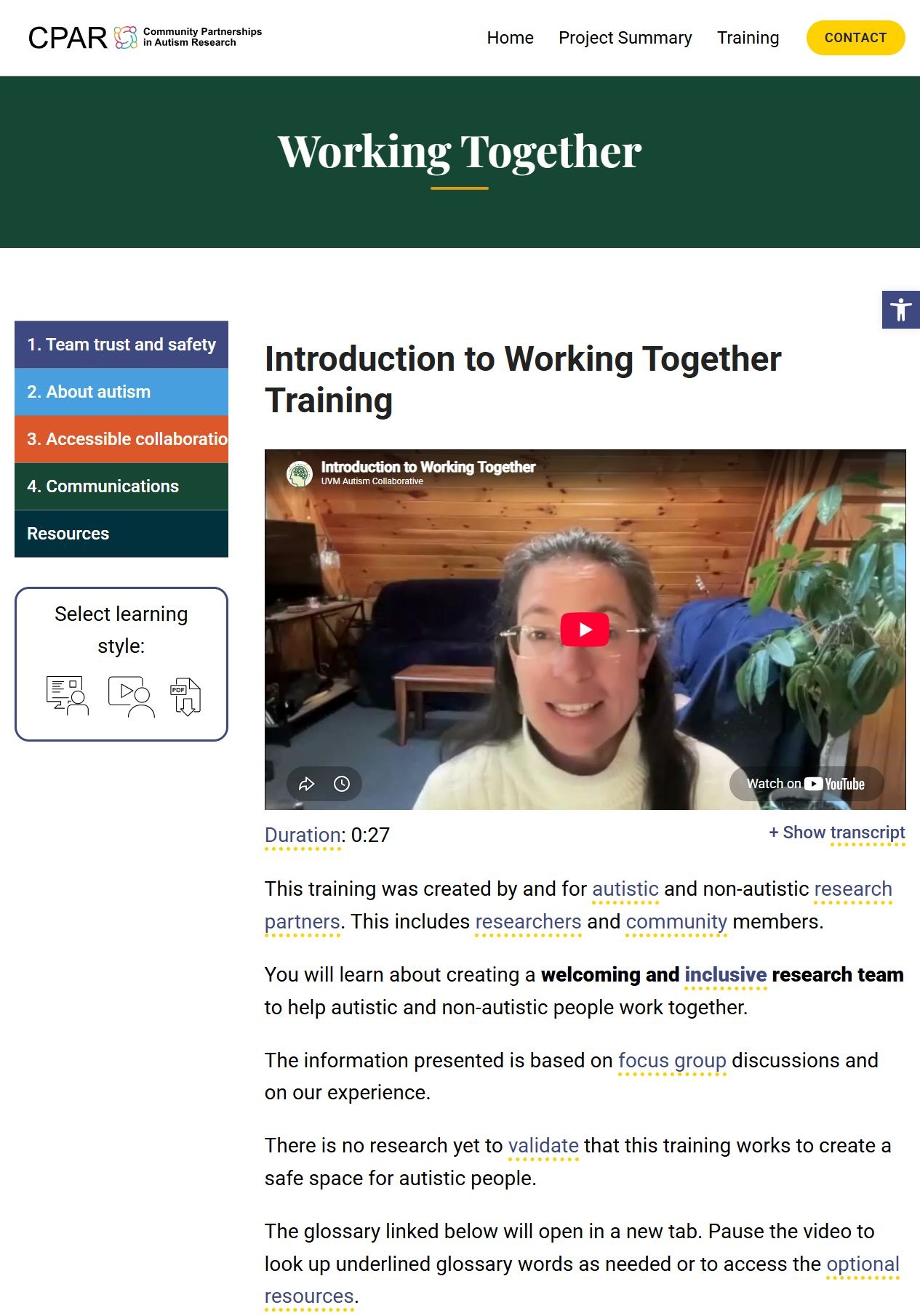
The Working Together Training approaches research partnerships from the other direction.
Developed by autistic community partners, the training gives researchers a practical understanding of the strengths and challenges autistic people may bring to a research team, and how to collaborate effectively with them.
Providing both programs through the same website reinforces the project’s central idea: successful partnerships require preparation and understanding from everyone involved.
Supporting Different Ways of Learning
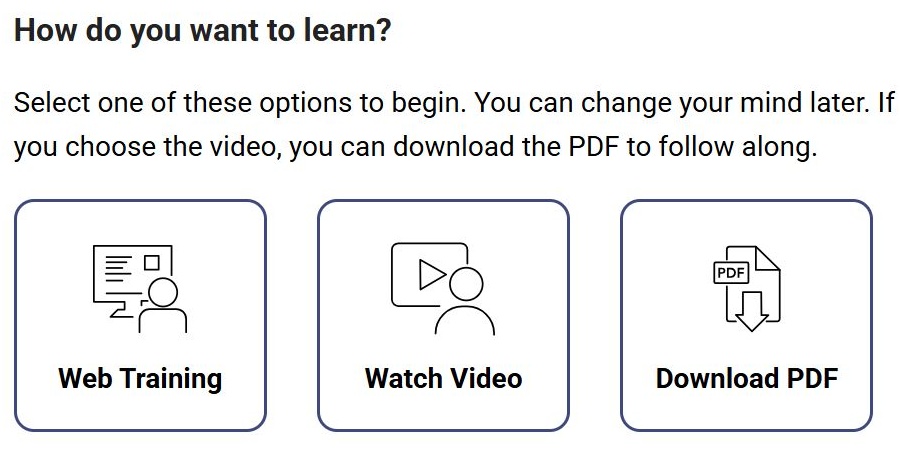
A central requirement of the CPAR website was providing participants with multiple ways to engage with the training.
Rather than relying on a single delivery format, the platform offers:
- Online training: Web-based materials that participants can access directly through the website.
- Downloadable PDFs: Accessible versions of the training presentations for independent study and reference.
- Video training: Accessible video versions supplied by the research team.
These options allow participants to choose the format that best meets their learning preferences and accessibility needs.
The website organizes these resources so that users can find the appropriate training and select their preferred format.
Making Complex Training Materials Accessible
One of the most technically demanding aspects of the project was preparing the downloadable training presentations.
The research team had created two presentations in Google Slides, totaling nearly 250 slides. However, the original export process produced documents that could not be effectively remediated for PDF accessibility.
Tamarin developed an alternative production workflow. The presentations were exported to PowerPoint and then converted to PDF, creating files that could be remediated to address accessibility barriers.
This process required extensive document remediation across nearly 250 slides.
The result was a set of accessible downloadable training materials that participants could use alongside the online and video versions.
Accessibility was also a core requirement of the website itself. Tamarin developed the platform and its online training materials to be accessible to people with disabilities, ensuring that the digital delivery supported the project’s commitment to inclusive participation.
Collaborating Through Changing Requirements
Research projects rarely follow a perfectly linear development process, particularly when educational materials are being created through community collaboration.
For CPAR, the training content was still evolving when website development began. New materials, revisions, and changing requirements needed to be accommodated throughout implementation.
Tamarin worked closely with the research team to coordinate content updates, adapt the website as materials were finalized, and maintain accessibility throughout the process.
This flexible approach allowed development to move forward while the research team continued refining its educational content.
The project required more than technical implementation. It called for a development partner who could manage complexity, communicate effectively, and respond to changing needs without losing sight of the final deliverable.
 The Result
The completed CPAR website provides an accessible online home for two complementary training programs supporting collaboration between autistic community partners and researchers.
The platform includes:
- Two training programs serving distinct but complementary audiences
- Accessible online learning materials
- Downloadable, remediated PDF presentations totaling nearly 250 slides
- Accessible video training alternatives
- A unified website designed to support different learning preferences and accessibility needs
The project demonstrates how thoughtful digital implementation can extend the value of community-engaged research. By combining accessibility expertise, technical problem-solving, and flexible collaboration, Tamarin Software helped the University of Vermont turn its training materials into a practical digital resource for research teams and community partners.
Planning an accessible training or dissemination project?
We work with research teams to turn funded projects into accessible websites, training platforms, and resources people can actually use.