The Toolkit for Remote Inclusive Research helps research teams collaborate remotely with research team members with intellectual and developmental disabilities (IDD), including during public health emergencies and disasters.
We developed the digital toolkit to connect practical research strategies with accommodations, remote adaptations, and supporting resources in one accessible HTML experience.
Project Facts
- Project
- Toolkit for Remote Inclusive Research
- Project Leads
- Beth Pfeiffer and Jessica Kramer
- Institutions
- Temple University and University of Florida
- Funding
- PCORI Eugene Washington Engagement Award EAIN-00109: Preparing Individuals with IDD for Engagement in Research During Public Health Emergencies and Disasters
- Toolkit Citation Year
- 2020
- Project Type
- Accessible HTML toolkit with 23 strategies cross-linked across seven research phases; online and offline delivery
- My Role
- Software development and implementation of the digital toolkit
- Keywords
- Inclusive research · Remote collaboration · Intellectual and developmental disabilities · Accessible toolkits · Research dissemination
- Website
- Explore the toolkit
The Project
Developed by researchers at Temple University and the University of Florida and their collaborators, the toolkit gives research team leaders practical ways to support inclusive collaboration.
Its 23 strategies are cross-linked with seven phases of the research process, from research skills training and choosing a topic through data collection, analysis, and dissemination.
My contribution was the software development: translating the team’s content into a digital resource that people could explore by research phase or individual strategy.
The Challenge
Moving a research team online introduces more than a change of meeting location. Team members may need support to use technology, follow a discussion, contribute ideas, make decisions, or work with data.
The toolkit needed to help leaders find approaches suited to the task in front of them while keeping the associated accommodations and resources easy to reach.
Many strategies also apply in more than one part of a project. The digital structure needed to reflect those relationships so users could discover a useful approach through different starting points.
Organizing the Toolkit Around Research Tasks
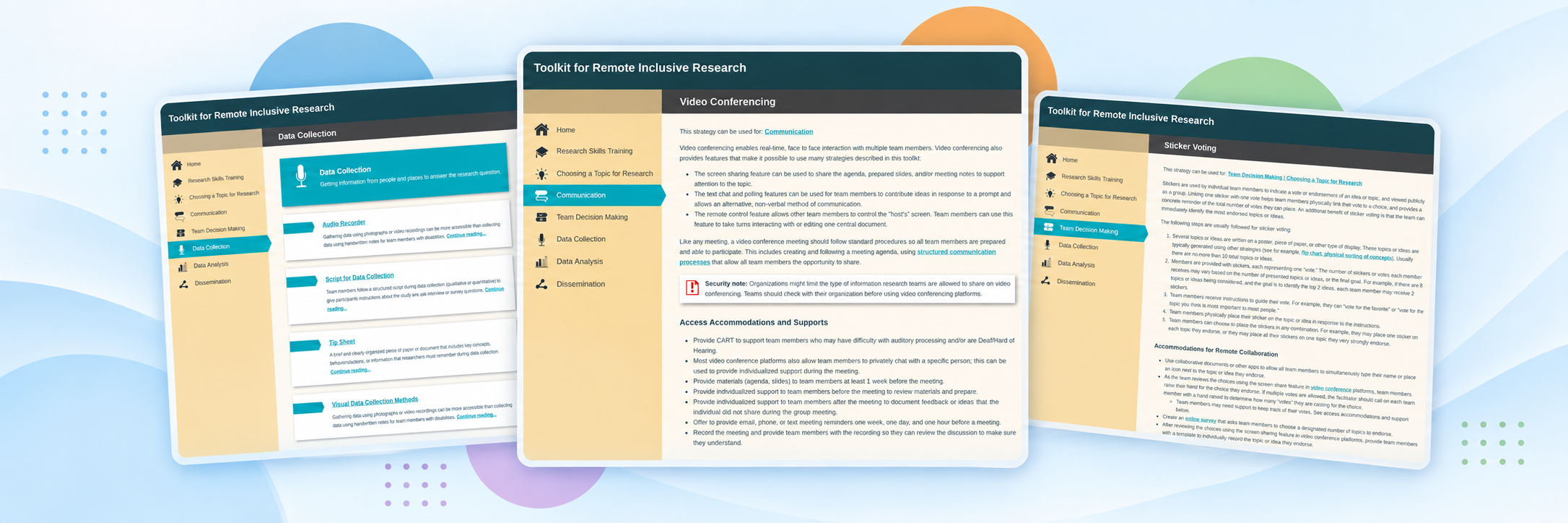
The navigation follows recognizable research activities: skills training, choosing a topic, communication, team decision making, data collection, data analysis, and dissemination.
Each phase combines relevant strategies with short descriptions and links to more detailed guidance. An All Strategies view provides another route for users who want to browse the complete collection.
Cross-links connect strategies to the phases where they can be used. For example, physical sorting of ideas appears under choosing a topic, team decision making, and data analysis.
This gives the same content several useful entry points without requiring users to know the name of a strategy before they begin.
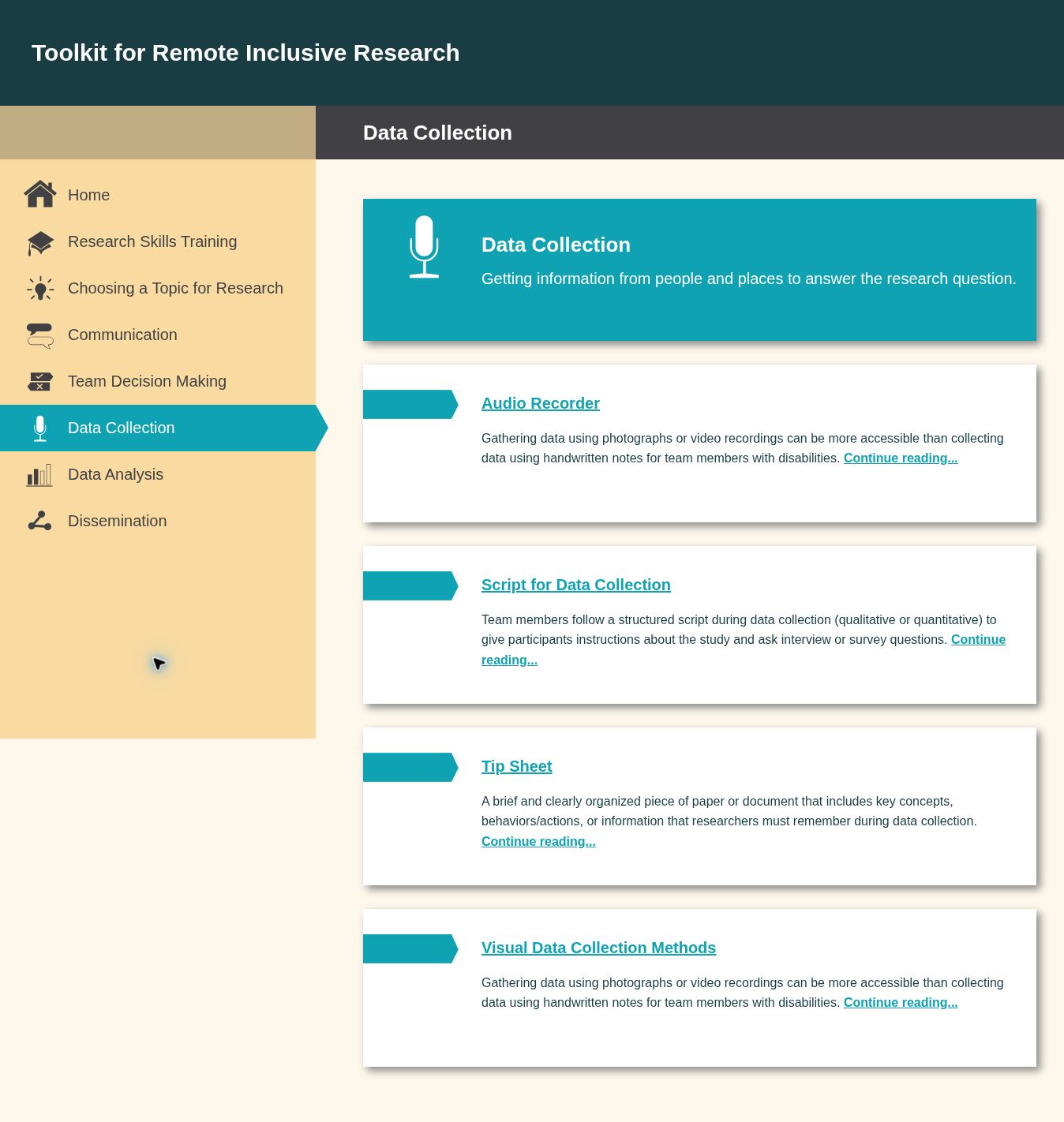
Research-phase navigation brings relevant strategies together in one place.
Keeping Guidance and Resources Together
Strategy pages bring explanations together with accommodations, supporting materials, and references. Where relevant, they also explain how an activity can be adapted for remote collaboration.
The sticker voting page, for example, connects the activity with remote voting approaches, access supports, and downloadable voting templates. A team leader can move from understanding the method to finding materials that support its use.
That structure keeps practical guidance close to the task it supports, reducing the need to search through separate collections of documents.
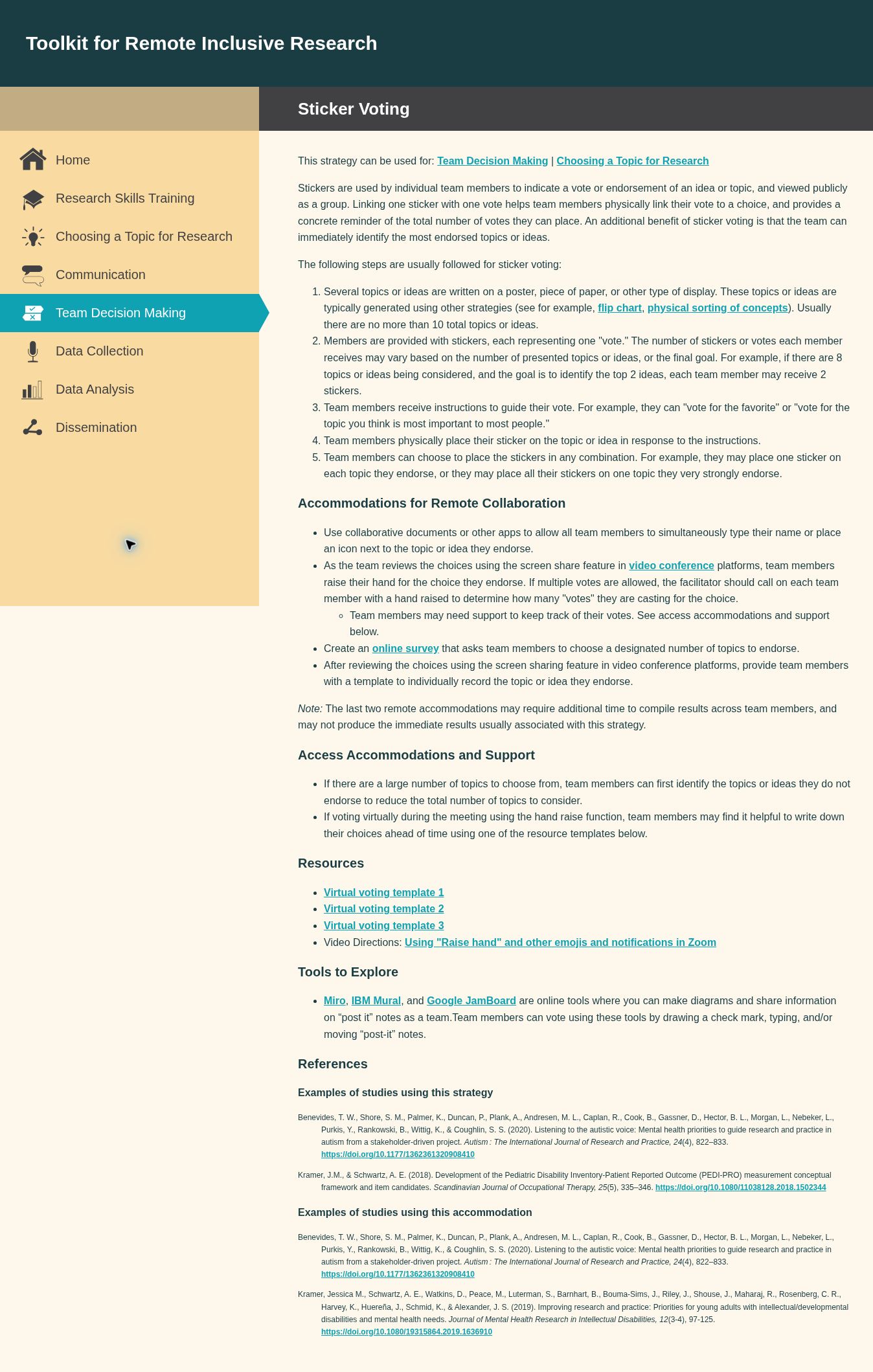
Strategy pages connect instructions with remote adaptations, access supports, and practical templates.
Supporting the Technology Behind Participation
The toolkit also connects research practices with instructions for using common collaboration technology.
The video conferencing page includes links to video and written directions for joining meetings, using controls, and participating in discussions. It places those resources alongside suggestions for preparing and supporting team members before, during, and after a meeting.
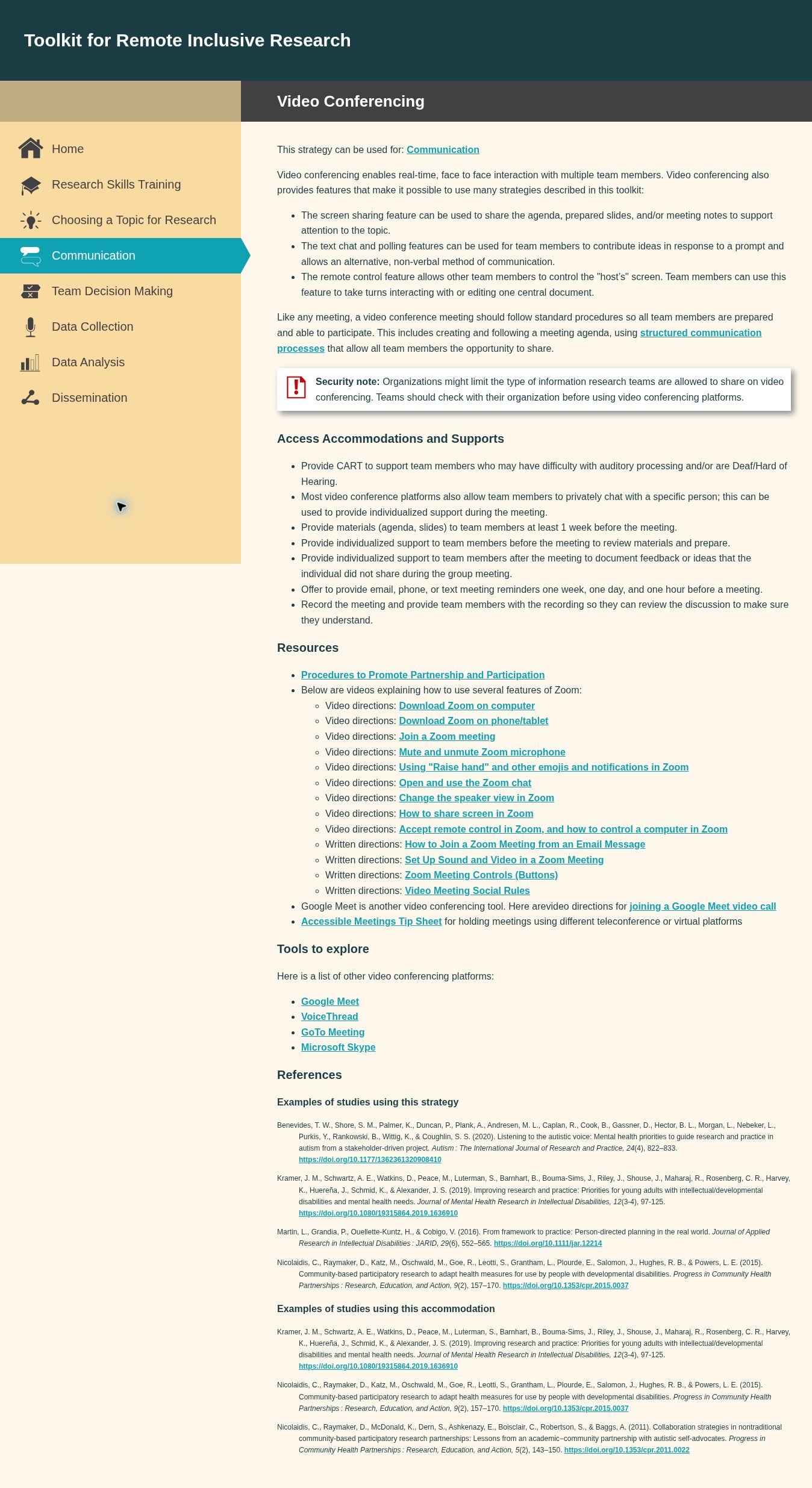
Technology instructions sit alongside the accommodations and resources needed for participation.
Making the Toolkit Portable
The toolkit is available online and as a downloadable HTML package. Users can extract the files and open the start page locally without an internet connection to browse the toolkit.
Online meetings and externally linked services still require connectivity. The offline package keeps the toolkit itself available for preparation, reference, and sharing.
The Result
The finished resource connects 23 research strategies with phase-based navigation, remote adaptations, accommodations, templates, technology guidance, and examples from published research.
Research team leaders can begin with the activity they are planning and find both an approach and the resources that help them put it into practice.
For me, this project shows how digital structure can support research dissemination: making a substantial body of guidance easier to locate, explore, and apply.
Planning an Accessible Research Toolkit?
We work with research teams to turn funded projects into accessible websites, training platforms, and practical digital resources.