How a PCORI-funded training project became a digital platform that has continued supporting new research, new audiences, and additional funded work for a decade.
Project Facts
- Project
- Family and Youth Research Education (FYREworks): Trainings and Resources for Research Partnerships Involving Adolescents
- Principal Investigator
- Katherine Bevans
- Institutions
- Children’s Hospital of Philadelphia (CHOP); Temple University
- Funder / Award
- Patient-Centered Outcomes Research Institute (PCORI), Engagement Award Project
- Grant Size
- $227,208
- Project Period
- 2016–2018
- Project Type
- Interactive online training platform
- My Role
- Digital strategy, user experience and interface design, custom web development, and ongoing platform expansion
- Keywords
- Research engagement · Youth and family engagement · Online training · Interactive learning · Research partnerships · Custom web development · PCORI
- Website
- fyreworkstraining.com
The Project
FYREworks began with a 2016 PCORI Engagement Award focused on helping adolescents, families, and researchers build stronger partnerships in patient-centered outcomes research.
The research team developed the content, curriculum, and approach. My role was to turn that work into an interactive digital training platform.
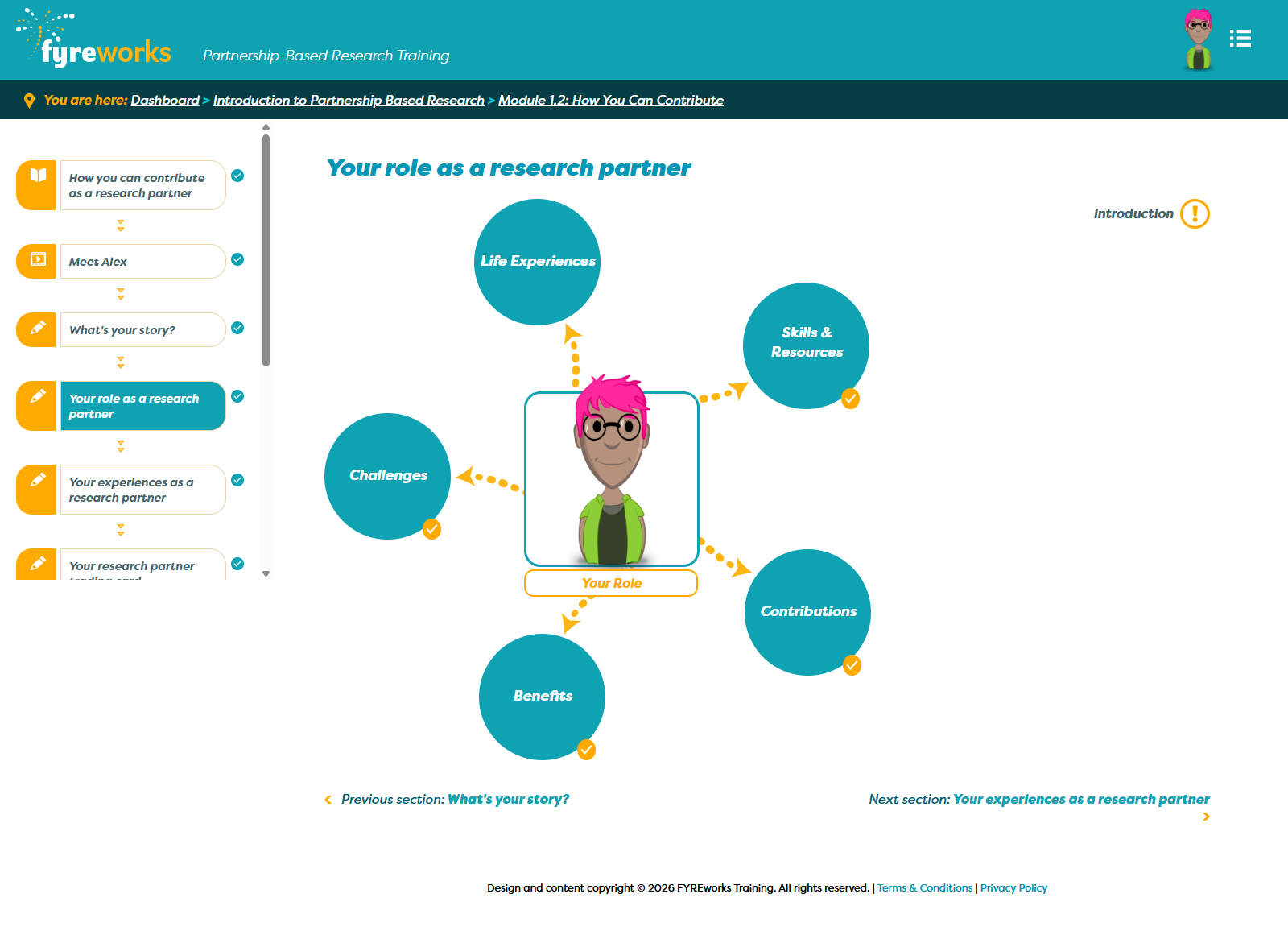
FYREworks uses interactive activities to help learners connect research concepts to their own experiences and roles on a research team.
I designed and built the FYREworks site, creating the digital structure and experience around the research team’s work so that youth, family partners, and researchers could move through the training online.
PCORI describes FYREworks as a set of interactive, web-based trainings and toolkits designed to help youth and researchers create research partnerships and conduct patient-centered outcomes research together.
Building the Platform
The goal was never simply to put a collection of documents on a website. FYREworks needed to function as a training experience.
I translated the research team’s curriculum into an interactive environment built around practical exercises, stories, multimedia, and recurring illustrated characters. Learners make choices, build research teams, work through scenarios, create an avatar to represent themselves, and apply concepts as they move through the training rather than simply reading about them.
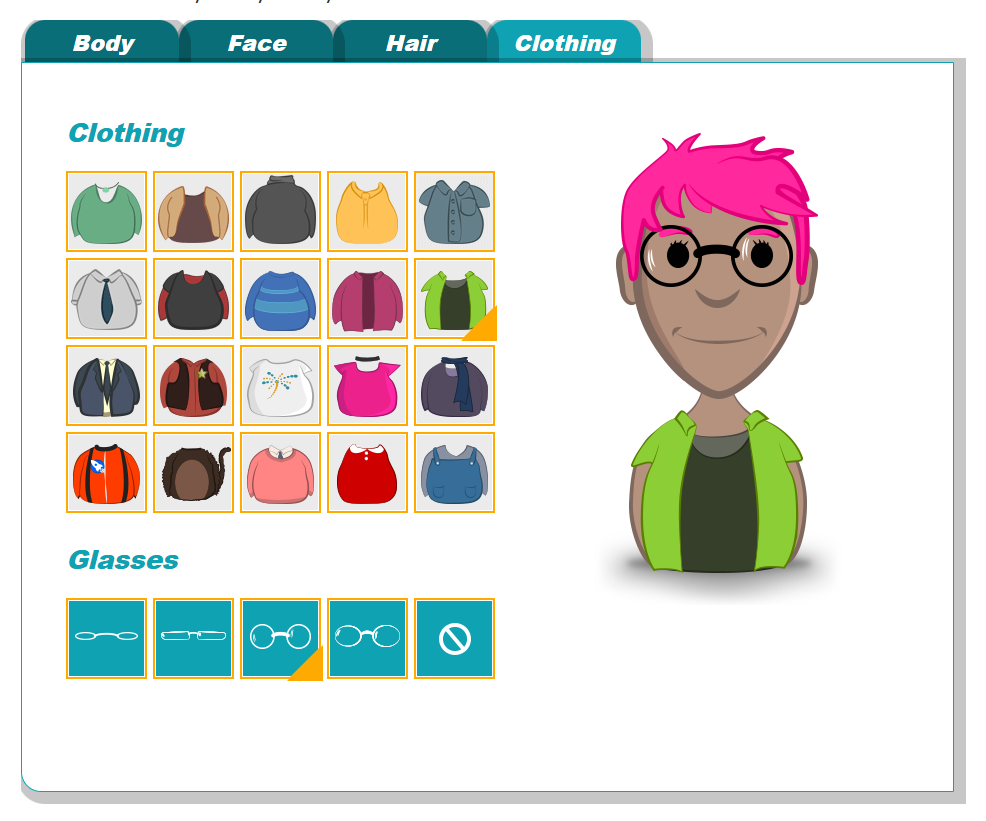
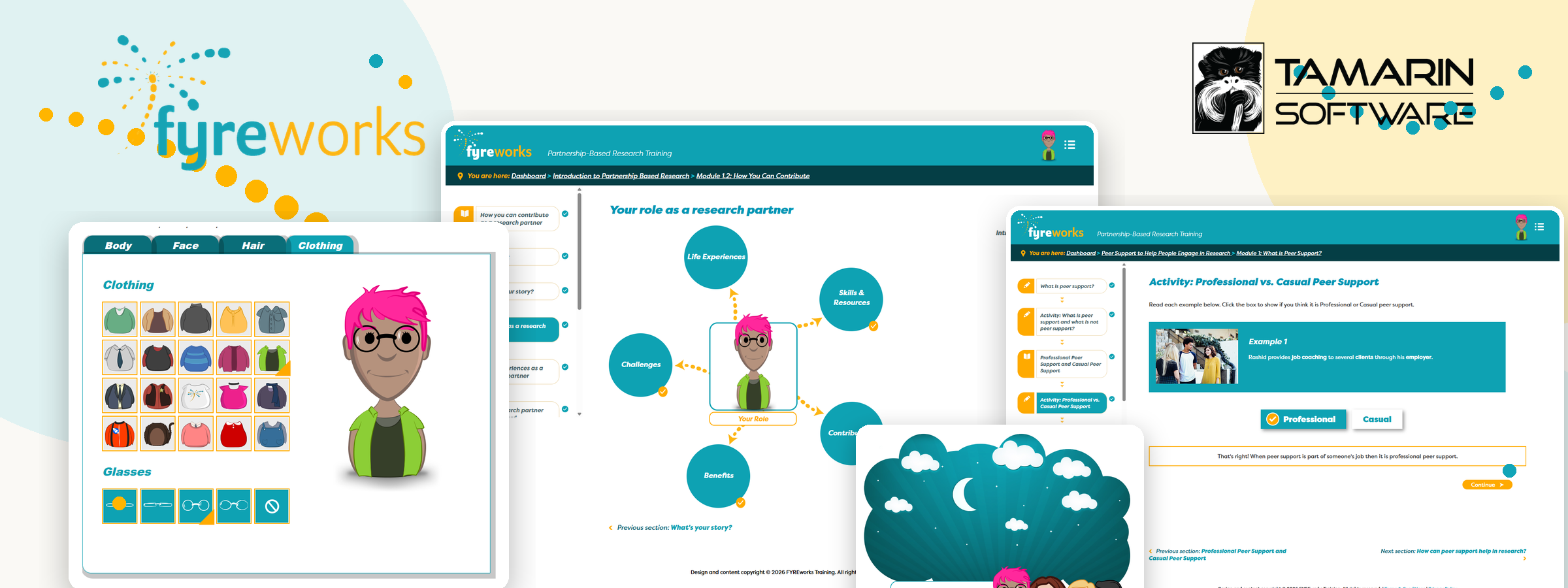
Learners can create an avatar that represents them throughout the training, adding a personal element to the learning experience.
The content is also intentionally multimodal. Users can read or listen to content, work through narrated stories and activities, and watch videos with closed captions and transcripts. That flexibility was especially important as the platform expanded to serve different audiences and different ways of learning.
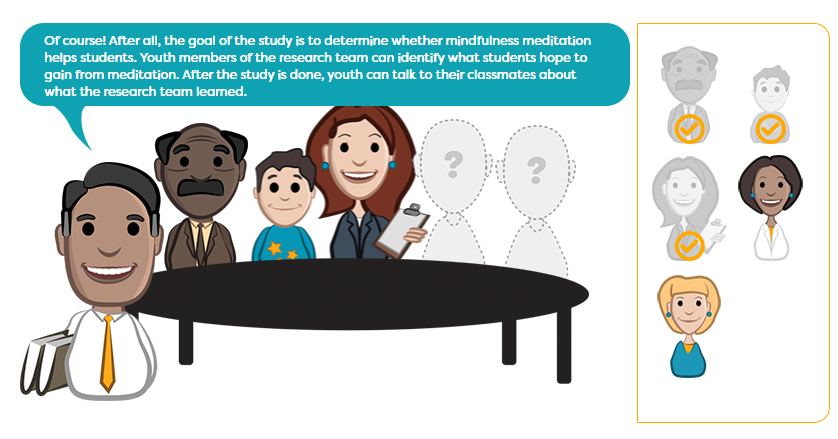
A drag-and-drop activity asks learners to build a research team by choosing people with the right perspectives and expertise.
The original training includes separate tracks for adolescent patients and for parents and caregivers of pediatric patients. The tracks cover similar core concepts but use activities and examples designed for each audience.
I built the platform so additional training units, audiences, and interaction types could be added as the research evolved.
What Happened Next
In 2021, the PCORnet Engagement Coordinating Center showcased FYREworks as part of a webinar featuring PEDSnet, describing it as a resource other organizations could use when working with young patients, caregivers, and research partners.
More importantly, FYREworks became infrastructure for additional funded research.
Two new training units have since been added through later PCORI-funded work.
Expansion One: Research Partnerships During Public Health Emergencies
The first expansion grew directly out of the COVID-19 pandemic.
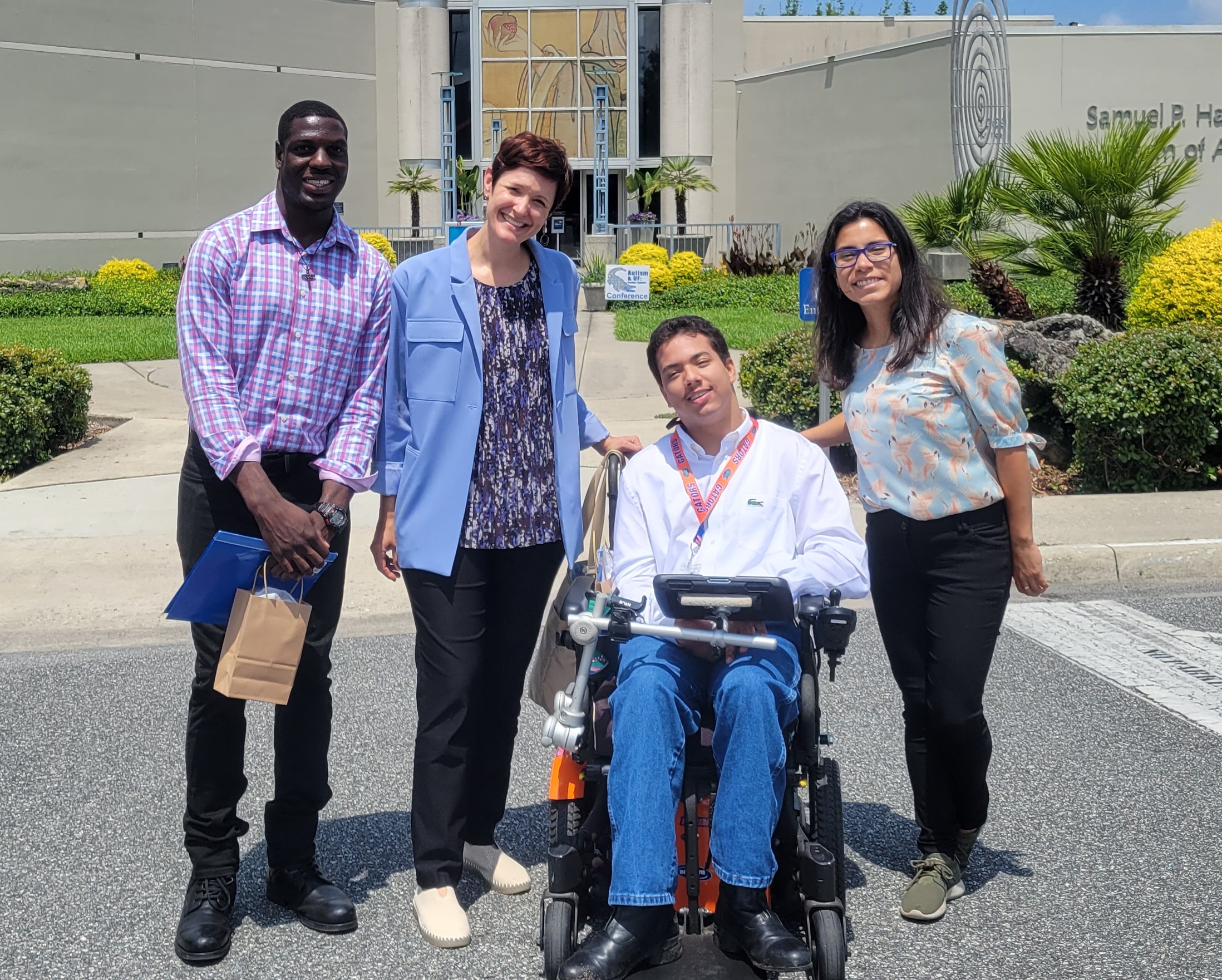
Members of the University of Florida YELL team, including researchers with intellectual and developmental disabilities who contributed to development of the public-health-emergencies training. L-R: Cyril Nonga- Mann, Dr. Jessica Kramer, Elijah Thomas, Fiorella Guerrero (PhD student)
In 2020, PCORI funded Preparing Individuals with Intellectual or Developmental Disabilities for Engagement in Research During Public Health Emergencies and Disasters, a $150,000 Engagement Award project led by Elizabeth Pfeiffer at Temple University in collaboration with Jessica Kramer and the Youth and young adult Empowerment, Leadership and Learning lab (YELL) in the Department of Occupational Therapy at the University of Florida.
The project was funded through a special PCORI cycle created to support research engagement in the context of COVID-19.
As the pandemic disrupted in-person collaboration, research partnerships needed ways to continue functioning remotely. People with intellectual and developmental disabilities faced additional barriers to participating in that shift.
The project built on earlier PCORI-funded work and developed several connected resources, including a remote inclusive research toolkit, peer-support resources, and a new FYREworks training unit.
The new unit was designed with researchers with intellectual and developmental disabilities and included accessible training in the practical skills needed to participate remotely, including video-meeting norms and expectations and strategies for communicating questions or concerns between scheduled meetings.
The unit combines narrated content, stories, interactive exercises, and practical examples. One activity, for example, shows how a research question may change when people with intellectual and developmental disabilities are part of the research team.
Because FYREworks already provided an established training environment, the new project could build on that foundation while adapting the experience for a new audience and a very different research context.
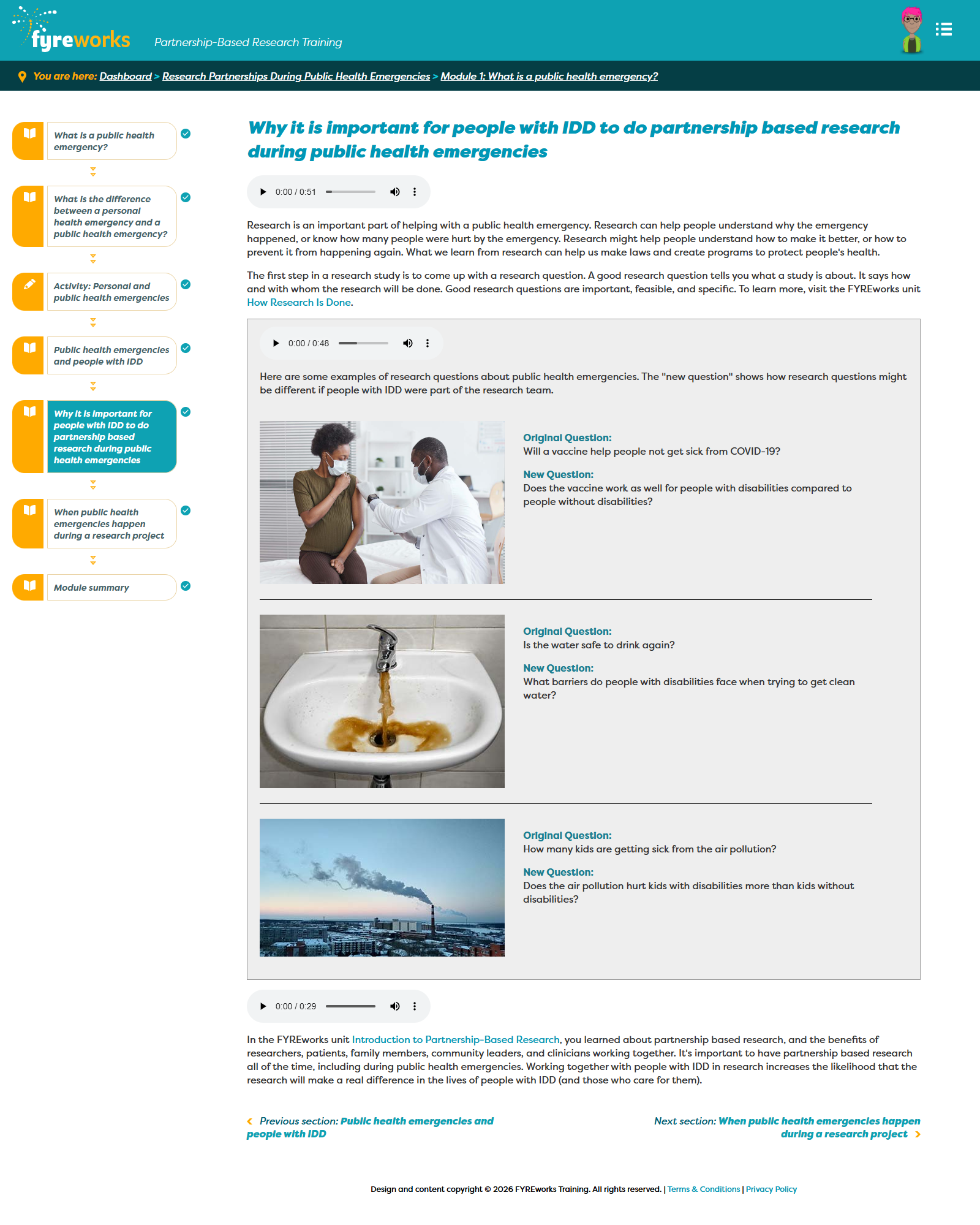
Examples show how research questions can change when people with intellectual and developmental disabilities are included as members of the research team.
Expansion Two: Peer Support
The peer-support work continued through a follow-on PCORI award.
From 2021–2023, the Peer Support and Research Engagement for Transition Age Youth and Young Adults with Intellectual and Developmental Disabilities project received a $200,000 PCORI Engagement Award (EASC-00296). Elizabeth Pfeiffer at Temple University led the project.
I worked with the Temple team on the digital implementation of the project’s resources, including the downloadable HTML Peer Support Toolkit and another new FYREworks training unit.
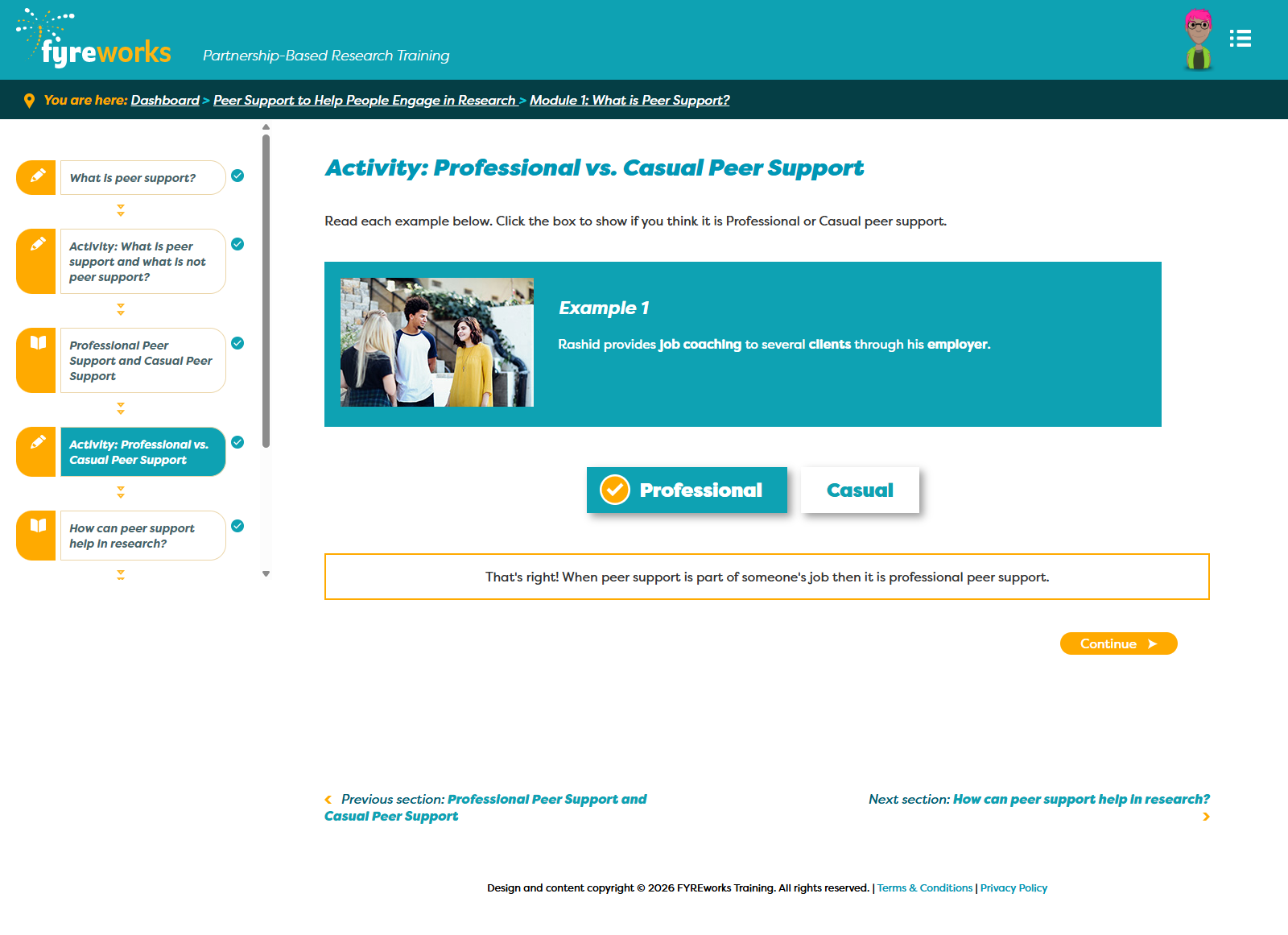
Scenario-based activities give learners opportunities to apply concepts—for example, distinguishing professional from casual peer support.
The FYREworks unit includes four modules exploring what peer support is, how it can strengthen research teams, how it can help people develop research skills and make decisions, and how peer support can be used throughout the research process.
Scenario-based exercises let learners practice concepts such as distinguishing professional from casual peer support and considering how peer support can function within a research team.
By this point, FYREworks had expanded well beyond its original curriculum. What began as training for youth, families, and researchers had become a platform capable of supporting new populations, answering new research questions, and supporting new research projects across institutions.
From Research to Interactive Digital Experience
My specialty is helping research teams translate their work into interactive digital experiences, such as training platforms, toolkits, assessments, decision tools, and resources.
FYREworks is a good example of what that can look like over time. For a decade, it has supported its original audiences, remained part of the broader PCORI and PEDSnet research-engagement ecosystem, and provided a foundation for additional funded research at other institutions.
The platform remains live and available for continued use, adaptation, and future expansion.
The research teams own the research. I help turn it into an interactive digital experience.
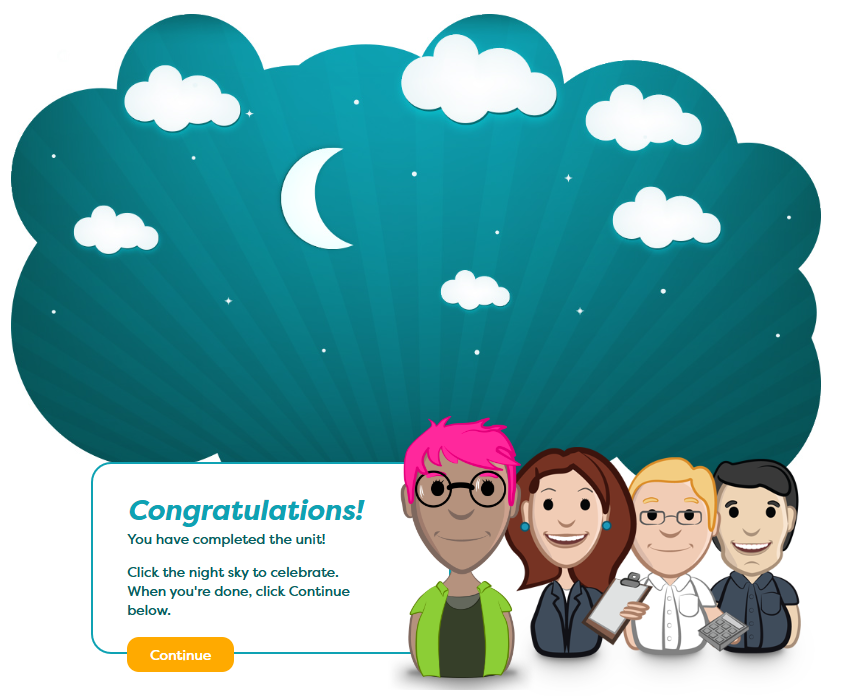
Each unit ends with a small interactive celebration: learners can click the night sky to launch fireworks.
Planning an accessible training or dissemination project?
I work with research teams to turn funded projects into accessible websites, training platforms, and resources people can actually use.